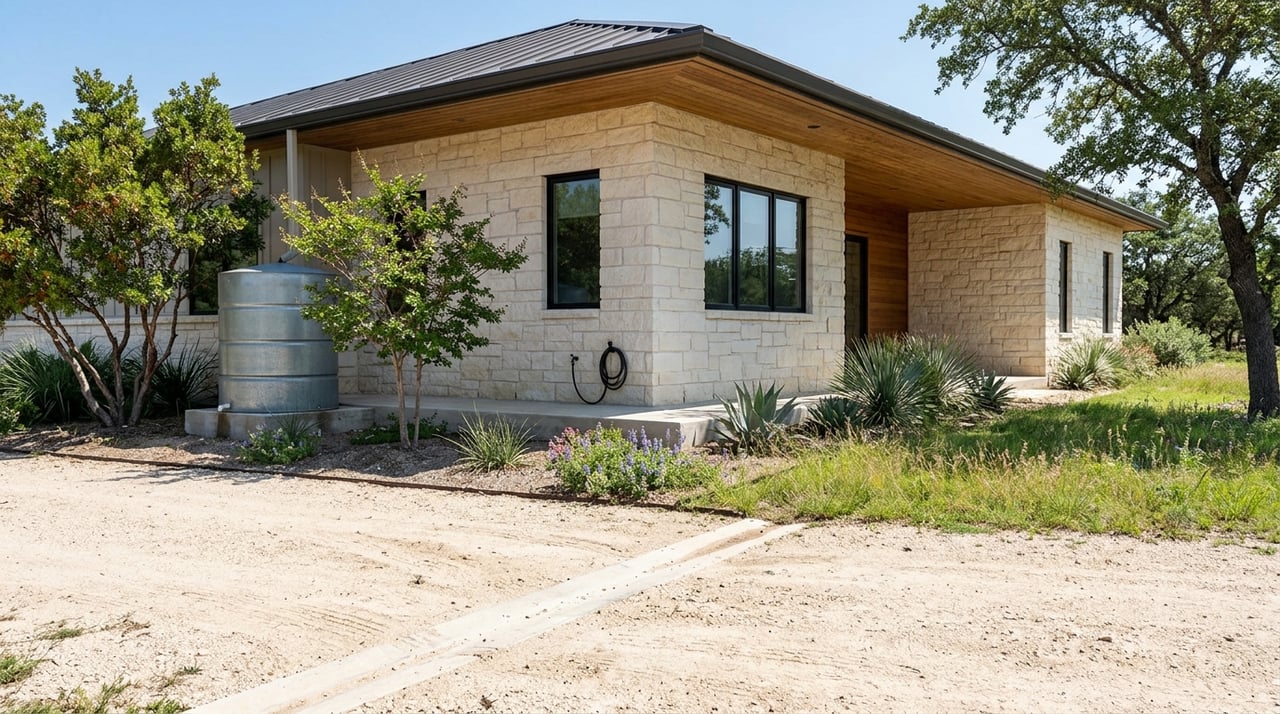
If you are picturing wide views, quiet mornings, and room to spread out, acreage living near Fredericksburg can absolutely deliver. But it also comes with day-to-day realities that feel very different from owning a home in town. If you are thinking about buying Hill Country land, this guide will help you understand what life on acreage is really like near Fredericksburg and what to check before you buy. Let’s dive in.
Acreage living feels truly rural
Fredericksburg sits in Gillespie County, where the population is spread out enough that acreage living feels genuinely low-density, not just like a larger suburban lot. The county’s density is about 25.3 people per square mile, which helps explain why privacy, open views, and quiet surroundings are such a big part of the experience.
You also get a location that still keeps regional access in reach. Fredericksburg is about 70 miles west of Austin and 65 miles north of San Antonio, so you can enjoy a more rural setting without feeling cut off from larger city amenities.
Hill Country land has a distinct character
The landscape around Fredericksburg is part of the Texas Hill Country on the Edwards Plateau. That means rolling to hilly land, limestone, steep canyons, springs, oak-juniper vegetation, and striking natural features like the granite domes near Enchanted Rock.
For many buyers, that character is exactly the draw. You may be looking for long-range views, more privacy, wildlife, and a property that feels tied to the land rather than shaped into a typical subdivision aesthetic.
The beauty comes with tradeoffs
The same features that make Hill Country acreage appealing can also shape how you use and improve the property. Rocky soils, uneven building sites, brush management, and water planning are all common parts of ownership here.
That does not mean acreage living is difficult. It simply means the land itself plays a bigger role in your decisions, from home placement to drainage to long-term maintenance.
Expect a more land-conscious style of living
Near Fredericksburg, acreage properties are often approached with a stewardship mindset. Gillespie County’s engineering guidance encourages water conservation, native landscapes, and night-sky-friendly lighting in subdivision and HOA documents.
In practical terms, that means the local vision of acreage living is often less about heavily manicured grounds and more about working with the natural setting. If you love the idea of native plants, dark skies, and a property that blends into the Hill Country, that local approach may feel like a great fit.
Utilities vary from tract to tract
One of the biggest surprises for acreage buyers is how different utility service can be from one property to the next. You should not assume that a parcel outside town will have the same setup as a home in Fredericksburg city limits.
The City of Fredericksburg provides municipal water and wastewater service in the city and some nearby areas, while Central Texas Electric Co-op serves Gillespie County outside the city. Because service availability can change lot by lot, utility research should be part of your early due diligence.
Questions to ask about utilities
Before you move forward on an acreage property, it helps to confirm:
- Whether the home or tract has city water or a private well
- Whether wastewater is city sewer or an on-site septic system
- Which electric provider serves the property
- Whether natural gas is available or propane is used instead
- What internet options exist at the exact location
- How trash service is handled
These are not small details on rural land. They shape both your monthly costs and your day-to-day convenience.
Internet, trash, and fuel need a closer look
Many buyers today want acreage without giving up connected living. Countywide data shows that 89.1 percent of households report a broadband subscription and 94.4 percent report a computer, which suggests a solid baseline. Still, for work-from-home needs or streaming, you should test service at the exact tract rather than relying on a general coverage assumption.
Trash service can also differ from what you may be used to in town. Fredericksburg’s garbage collection program is a city residential service, so rural acreage owners may need to arrange private hauling or plan for self-haul.
Fuel setup matters too. Some homes may rely on gas or propane appliances, and the city’s utility annex identifies Atmos Energy for Fredericksburg and Gillespie County along with local propane dealers. That is one more reason to verify how a property actually functions before you buy.
Water is a major part of ownership
On Hill Country acreage, water is not something to treat as an afterthought. If a property uses a well, the Hill Country Underground Water Conservation District requires wells in Gillespie County to be registered.
There are also rules tied to how a well is used. For example, if a domestic or livestock well is later used for other purposes, a permit may be required, and domestic wells tied to irrigation systems larger than one-half acre are not exempt.
Drought conditions affect daily decisions
Fredericksburg’s water-conservation information notes that the city and county are experiencing extreme to exceptional drought conditions, and the city has Stage 4 water conservation measures in place. For acreage owners, this reinforces how important water planning and conservation can be.
If you are evaluating a tract, it is smart to ask detailed questions about existing water infrastructure, well status, storage, and how the property has been managed during dry periods. In this market, water is part of the lifestyle and part of the budget.
Septic is often part of the package
Many acreage properties rely on on-site sewage facilities rather than city sewer. In Texas, septic systems require permits and site-specific evaluation, and Gillespie County has an added local process tied to floodplain review.
Effective August 1, 2025, floodplain determinations are handled by the County Engineer’s Office, and a septic application is not complete until the Development Permit Determination form has been signed and provided to the OSSF office. That means buyers considering a build, remodel, or land purchase should pay close attention to the local approval path early.
Access is part of everyday ownership
On acreage, road access is not just a line item in paperwork. It affects how you reach the property, how emergency services locate it, and what approvals may be needed if changes are planned.
Gillespie County’s Rural Addressing Department says private roads with multiple livable structures must be named and each structure assigned a separate house number. If driveway access is off a state road, a TxDOT permit is required. If access is off a county road, county right-of-way approval and a 911 address location request form are required.
Access questions matter before closing
A beautiful tract can lose some appeal if access is unclear or improvements are more complex than expected. Before closing, you will want to confirm:
- Legal access to the property
- Whether any road or driveway approvals are needed
- The condition of existing roads or drives
- Whether a current survey is available
- Whether easements affect use or future plans
These checks can help you avoid expensive surprises later.
Subdivision potential is not automatic
Some buyers want acreage for personal use now and flexibility later. If that is part of your plan, subdivision rules need to be reviewed before you buy, not after.
Gillespie County says the minimum lot size for subdivisions served by well and on-site sewage facilities is 6 acres per lot, with a maximum density based on the parent tract divided by 8. The County Engineering Department also reviews subdivision, floodplain, and right-of-way permits.
That means future split potential depends on more than the total acreage number. Access, infrastructure, water, septic suitability, and county rules all matter.
Taxes can change with land use
Acreage buyers also need to understand how property taxes may shift over time. In Texas, qualified agricultural or open-space land may be appraised on productivity value rather than market value.
If the land use changes, rollback tax can apply. That is the difference between taxes paid on the agricultural value and the taxes that would have been paid at market value.
Why ag valuation history matters
If you are buying acreage with an eye toward building, changing use, or holding as an investment, past and present valuation status can have a real financial impact. This is one reason experienced local guidance matters so much with Hill Country land.
You will want to review the property’s current use, tax treatment, and how your future plans could affect ownership costs. On acreage, the sticker price is only part of the financial picture.
Wildfire and land upkeep are real considerations
Living on acreage often means taking a more active role in maintaining the property. In this part of Texas, drought and wildfire planning are part of that responsibility.
The Texas General Land Office recommends keeping a 30-foot fire-resistant zone clear around structures, knowing your access roads and water sources, and planning evacuation routes. Gillespie County also says owners should check for an active burn ban, notify Fredericksburg Fire Department before a controlled burn, and only burn outside city limits under the listed rules.
For many owners, this kind of upkeep is part of the appeal. You have more control over your land, but you also have more direct responsibility for how it is managed.
A smart acreage purchase starts with due diligence
The biggest difference between buying a house in town and buying acreage near Fredericksburg is not just lot size. It is infrastructure, access, water, and stewardship.
Texas A&M AgriLife Extension recommends verifying surface rights, groundwater rights, mineral rights, easements, leases, access, title, and a current survey. It also recommends budgeting for fencing, water infrastructure, access improvements, property taxes, insurance, and other ownership costs.
A simple acreage checklist
If you are comparing properties near Fredericksburg, keep this checklist handy:
- Confirm water source and well status
- Verify septic permits and system details
- Check electric, gas, propane, internet, and trash options
- Review legal access, road condition, and driveway approvals
- Ask for a current survey and note any easements
- Review tax valuation and land-use history
- Understand subdivision limits if future splitting matters
- Budget for fencing, brush work, road upkeep, and water infrastructure
With the right property and the right guidance, acreage living can be one of the most rewarding ways to enjoy the Texas Hill Country.
If you are exploring land or lifestyle properties near Fredericksburg, working with someone who understands the local details can save you time and help you make a more confident decision. To talk through your goals and compare properties with a local expert, connect with Krista Duderstadt.
FAQs
What is acreage living like near Fredericksburg, Texas?
- Acreage living near Fredericksburg usually means more privacy, open views, wildlife, and a rural pace, along with more hands-on responsibility for water, land upkeep, access, and utilities.
Do acreage properties near Fredericksburg have city water?
- Some do, but many do not. The City of Fredericksburg serves the city and some nearby areas, so you should confirm water service for each property individually.
Do Hill Country acreage homes near Fredericksburg usually have septic systems?
- Many acreage properties rely on on-site sewage facilities, and those systems require permits and site-specific evaluation.
Can you get reliable internet on acreage in Gillespie County?
- Many households in Gillespie County have broadband, but service quality can vary by location, so it is important to verify internet options at the exact tract.
Can acreage land near Fredericksburg be subdivided later?
- Possibly, but it depends on county rules, lot size, access, and infrastructure. For well and septic subdivisions in Gillespie County, the minimum lot size is 6 acres per lot.
What should buyers check before purchasing acreage near Fredericksburg?
- Buyers should verify water, septic, utilities, legal access, survey status, easements, tax treatment, and likely upkeep costs before closing on acreage property.