If you have ever driven through Fredericksburg and thought, "Why do these homes feel so distinct?" you are noticing a big part of what makes this market special. From early German stone houses to bungalows, ranch homes, and newer Hill Country designs, the area’s architecture tells the story of how Fredericksburg grew over time. If you are buying, selling, or simply trying to understand what gives a property its character, this guide will help you spot the styles that shape Fredericksburg and what they can mean in real life. Let’s dive in.
Why Fredericksburg homes look different
Fredericksburg was founded on May 8, 1846, by German immigrants, and that early settlement pattern still shows up in the local housing stock today. The city notes that settlers received a 100-by-200-foot town lot and a 10-acre outlot, and many began with log homes or fachwerk before building more substantial stone houses.
That history matters because the built environment still reflects it. Fredericksburg’s Historic District was listed on the National Register in 1970, and the city says it contains more than 700 historically significant structures. When you walk or drive through older parts of town, you are seeing layers of local history that continue to shape buyer interest and property appeal.
German vernacular homes
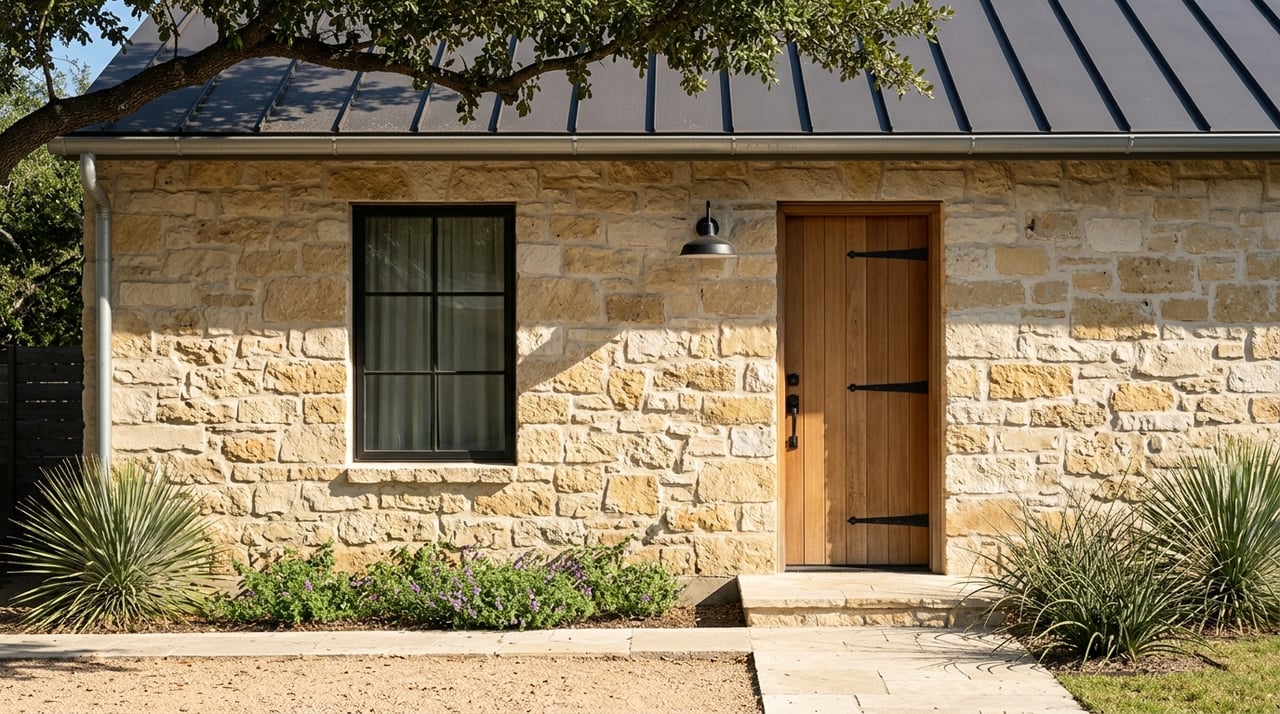
One of the most recognizable Fredericksburg looks is the German vernacular stone house. Local design guidelines describe these homes as fachwerk or limestone masonry, sometimes finished with stucco, with thick walls, narrow windows, handmade construction, and very little applied ornament.
In everyday real estate terms, this is often the style buyers think of as the classic Fredericksburg stone cottage or stone farmhouse feel. Some homes may also have arched lintels, attic-level cornice peaks, or roofs that were once wood shake and later changed to metal.
What stands out visually
These homes often feel simple and grounded rather than flashy. Their charm usually comes from natural materials, wall thickness, window proportions, and a direct connection to the town’s early building traditions.
If you are comparing homes, this style often appeals to buyers who want authenticity and a strong sense of place. Sellers with this type of property can also benefit from understanding which original details still remain, since those features often shape how buyers perceive value and character.
Sunday houses and folk forms
Another home type that gets a lot of attention in Fredericksburg is the Sunday house. According to the city, these were small townhouses built by German settlers who lived in rural areas and came into town on weekends for church, trading, and socializing.
Most surviving examples date from the 1890s to the 1920s. They were often one to one-and-a-half stories, originally just one room wide, with features like lean-to kitchens, porches, or later rear additions.
Why buyers find them interesting
Sunday houses carry a lot of local identity, but they are not always easy to identify at a glance. The city specifically notes that confirming whether a home is an authentic Sunday house may require research rather than a quick visual impression.
That is important if you are buying or selling a home marketed with that label. Related folk forms such as hall-and-parlor, center-passage, I-house, and L-plan houses also appear in Fredericksburg, and some combine early limestone or fachwerk construction with later additions.
Craftsman and bungalow homes
Fredericksburg also includes bungalows and Craftsman homes, especially from roughly 1915 to 1940. These homes typically emphasize simplicity, natural materials, exposed rafters, wide eaves, tapered porch columns, and paired wood windows.
The bungalow form is usually compact and centered around a prominent porch. In the historic district, Bungalow/Craftsman is one of the style groups identified in the district inventory.
What this style offers
For many buyers, these homes strike a balance between historic character and practical living. They often feel approachable in scale while still offering strong architectural details.
Porches are especially important here. In Fredericksburg, porches are not just decorative. They are a major part of the local streetscape and play a big role in how a home connects to the street and to the overall feel of the neighborhood.
Ranch and midcentury homes
Not every notable Fredericksburg home is from the 19th or early 20th century. After World War II, ranch houses became common, and the city’s guidelines describe them as homes that usually sit on wider lots and often include attached garages.
These houses may use brick, stone, wood siding, or flagstone. They also tend to feature deep eaves and a low, stretched profile that reflects postwar design.
How they change the streetscape
Ranch homes often feel different from the older historic core. Instead of compact, street-oriented building patterns, they are more likely to have front yards, wider spacing, and layouts shaped by automobile-oriented development.
For buyers, that can translate into a very different daily feel. Some people love the walkable, close-knit layout of older blocks, while others prefer the wider lots and more spread-out setting common with ranch-era development.
Contemporary Hill Country styles
Fredericksburg’s architectural story continues with newer homes that fit the Hill Country context. The city’s design guidelines identify Hill Country Modern and Farmhouse Modern as compatible new-build styles, while still making it clear that new buildings should fit their surroundings without copying historic homes exactly.
Hill Country Modern typically uses locally available materials, traditional passive climate-control ideas, limestone masonry, large windows, low-sloped or shed roofs, standing-seam metal, and minimal ornament. Farmhouse Modern often blends wood or fiber-cement siding with stone, brick, or stucco accents and cross-gabled roofs.
Why newer homes still feel local
The most successful newer homes in Fredericksburg usually take cues from local materials and proportions rather than trying to imitate historic details piece by piece. That approach helps preserve the overall character of an area while still allowing a home to function as clearly new construction.
If you are shopping for a newer property, this can be a useful lens. Two homes may both be recent builds, but one may feel much more connected to Fredericksburg’s setting because of its materials, rooflines, and relationship to the lot.
Historic district rules matter
If a property is inside Fredericksburg’s local historic district or is a local landmark, exterior changes are not handled the same way as they would be elsewhere. The city adopted its current Historic District Design Guidelines and Standards on July 19, 2021, and those standards are used by staff and the Historic Review Board to evaluate exterior changes and new construction in the district and on local landmarks.
The city also requires a certificate of appropriateness, or COA, for all exterior changes to historic properties. In addition, individual landmarks can exist outside the historic district, so location alone does not tell the whole story.
Questions to ask before buying
If you are considering a historic property, it helps to ask a few practical questions early:
- Is the home inside the historic district?
- Is it a designated landmark?
- Which exterior features appear original?
- Have windows, porches, or masonry been significantly altered?
- Will future exterior projects need city review?
These questions can help you understand both the appeal of the home and the responsibilities that may come with ownership.
What upkeep can look like
In Fredericksburg, maintenance differences often come down to materials and original features. The city’s guidelines say historic features should be repaired rather than replaced whenever possible.
For windows, the guidelines say openings should not be enlarged, altered, or relocated. If replacement windows are approved, they should match the original dimensions, profile, configuration, and spatial relationship.
Porches and wood details
Porches are a major part of local character, but they also need care. Guidance cited in the research notes that wood porches are vulnerable to moisture and insects, and Fredericksburg’s guidelines say historic porches should remain open if they were historically open.
When repairs are made, they should match the original materials, dimensions, profile, texture, and configuration. If you are evaluating an older home, the porch is not just a visual feature. It is also a clue to future maintenance needs and preservation expectations.
Masonry and stone care
Stone and brick also require the right approach. The city warns against waterproof coatings on masonry and notes that limestone and marble can be damaged by acidic cleaners.
That matters in a market where limestone is part of the area’s identity. A home’s stone exterior may look timeless, but proper care methods are important to protect both appearance and material integrity over time.
How style affects neighborhood feel
Architecture is not only about the house itself. It also shapes how a block feels when you arrive.
Fredericksburg’s historic core tends to feel more walkable and street-oriented because of the original town layout, compact folk house forms, porches, and Main Street frontage. By contrast, ranch houses and many newer homes are more likely to feel wider-set and more suburban in layout.
A practical way to compare areas
When you tour homes in Fredericksburg, it helps to look beyond finishes and square footage. Pay attention to how the home sits on the lot, how it meets the street, and whether the overall setting feels historic, transitional, or newer.
For many buyers, those details shape everyday lifestyle just as much as the floor plan does. For sellers, understanding that difference can also help position a property more clearly when it is time to go to market.
Why local guidance helps
In a place like Fredericksburg, home style is more than a design preference. It can affect buyer demand, renovation plans, maintenance expectations, and how a property fits into the broader market.
That is why local context matters. Whether you are drawn to a limestone cottage, a compact bungalow, a ranch on a wider lot, or a newer Hill Country home, it helps to work with someone who understands how Fredericksburg’s architecture connects to value, setting, and long-term appeal.
If you want help understanding how a home’s style, location, and features fit your goals in Fredericksburg or the surrounding Hill Country, reach out to Krista Duderstadt for consultative local guidance and a personalized plan.
FAQs
What are the most common historic home styles in Fredericksburg?
- Buyers often notice German vernacular stone houses, fachwerk homes, Sunday houses, related folk farmhouse forms, and Bungalow/Craftsman homes in Fredericksburg.
What is a Sunday house in Fredericksburg?
- A Sunday house is a small townhouse built by German settlers who lived in rural areas and used it on weekends for church, trading, and socializing in town.
Do historic homes in Fredericksburg have renovation rules?
- Yes. The city requires a certificate of appropriateness for exterior changes to historic properties in the local historic district and on local landmarks.
How can you tell if a Fredericksburg home is in the historic district?
- A good first step is to confirm whether the property is inside the local historic district or designated as a landmark, since some landmarks can also be outside the district.
What should buyers check on an older Fredericksburg home?
- Buyers should look closely at windows, porches, masonry, and whether exterior features appear original or heavily altered, since those details can affect upkeep and future project planning.
What newer home styles fit Fredericksburg’s character?
- The city’s guidelines identify Hill Country Modern and Farmhouse Modern as compatible new-build styles that use local materials and forms without copying historic homes exactly.